Here is a single-day Berlin itinerary for those who want to focus on WWII and Third Reich-related sights.
I’ve chosen as many central locations that can be reasonably visited in one single day, and this content doubles as a self-guided walking tour.
If you use this as a walking tour with my audio, it will take 2.5 to 3 hours to walk.
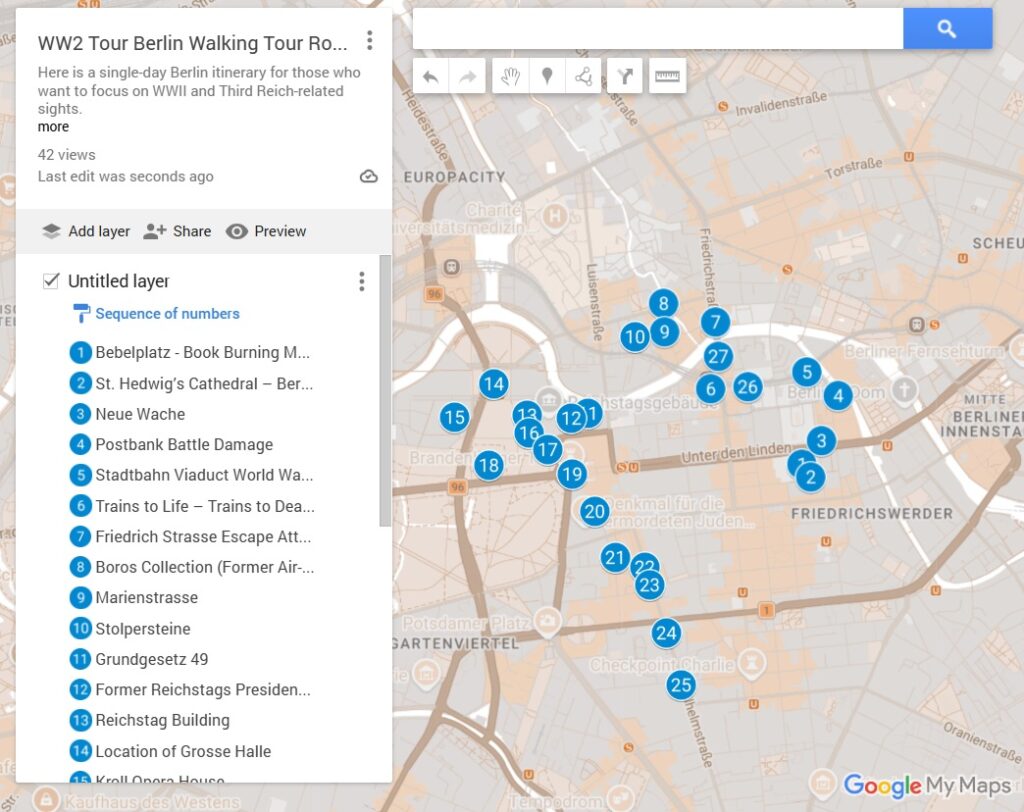
A link in the image above leads to a Google Map that you could download to your phone.
This is the route of my GPS-enabled audio tour of this same route. The audio tour is more extensive, with lots of textured stories above and beyond what’s in this free guide.
Here’s a small sample.
You can download the app here.
The Sunken Library
On 10 May 1933, this square was the site of one of the most infamous early acts of Nazi repression: the public burning of books deemed “un-German.”
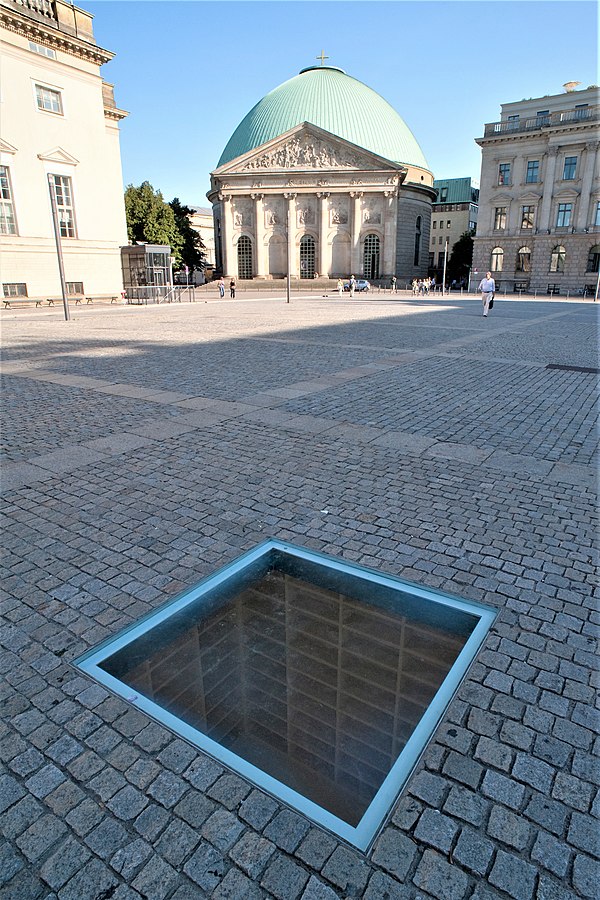
Works by Jewish authors, political critics, pacifists, and modern thinkers were thrown into the flames by students and Nazi officials.
The memorial set into the pavement—a glass window revealing empty bookshelves underground—marks the absence left behind and serves as an early warning sign of how persecution began long before mass murder.
2. St. Hedwig’s Cathedral
St. Hedwig’s Cathedral is closely associated with Bernhard Lichtenberg, a Catholic priest who openly prayed for Jews during Nazi rule and protested state persecution.
Arrested by the Gestapo in 1941, he died en route to Dachau concentration camp in 1943.
I detail the circumstances behind his arrest, death, and eventual beatification in my audio tour.
3. Neue Wache
Although the Nazis didn’t create the Neue Wache, I added this because they elevated the site to honor WWI soldiers’ sacrifice, which was an important part of their overall message.
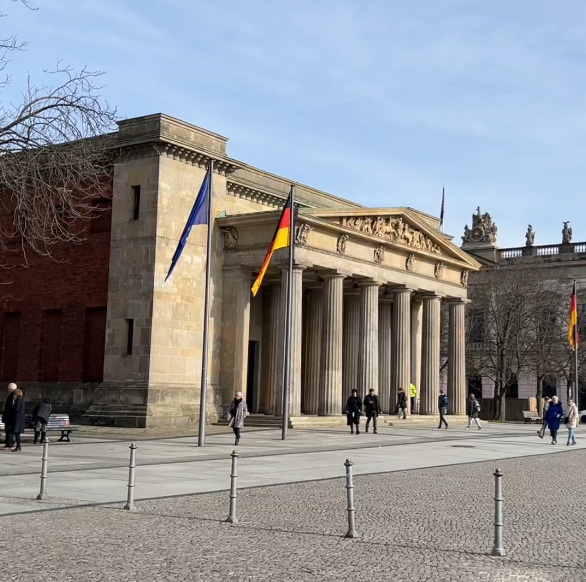
Today, serves as the Central Memorial for the Victims of War and Tyranny.
4. German Historical Museum
This location is a surprise to most of my tour guests.
The pinkish Baroque building is the Zeughaus, originally an armory before becoming a museum celebrating Prussian military history, and later used by the Nazis to glorify war.
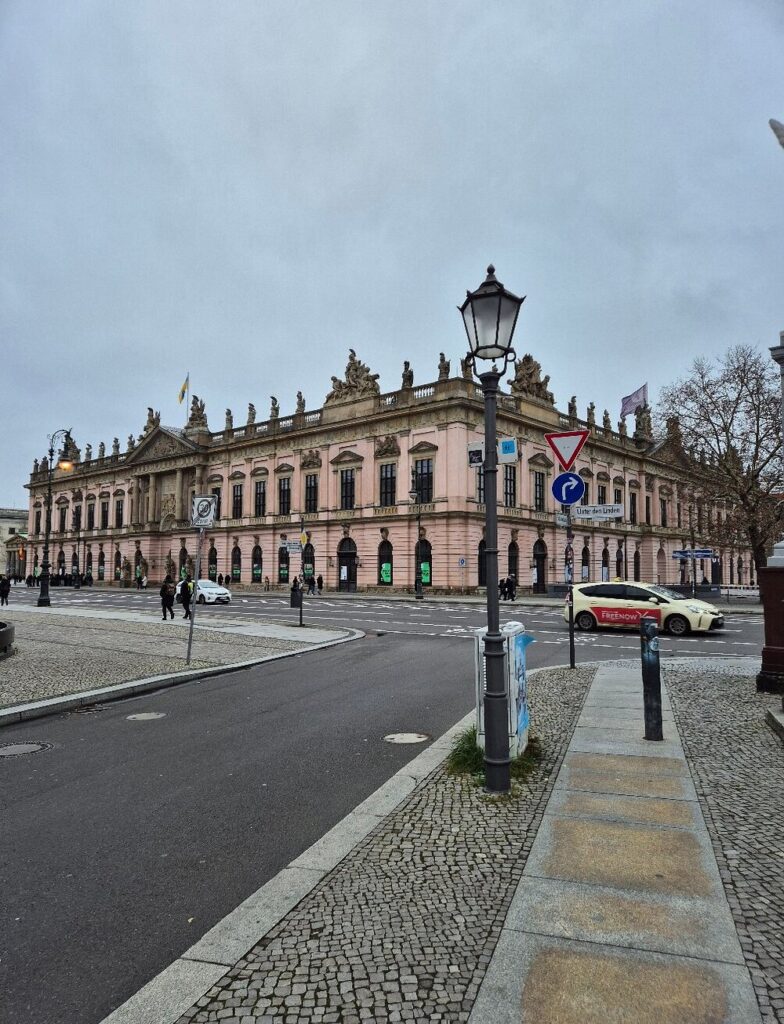
It was here in 1943 that resistance member Rudolf-Christoph von Gersdorff planned to assassinate Adolf Hitler in a suicide bombing.
I detail the attempt in a walk-and-talk clip.
5. Stadtbahn Viaduct World War II Damage
The Stadtbahn line is an elevated railway that runs east-west through the city center.
The viaduct’s arches, bridges, and elevated tracks were used as cover and firing positions by German forces.
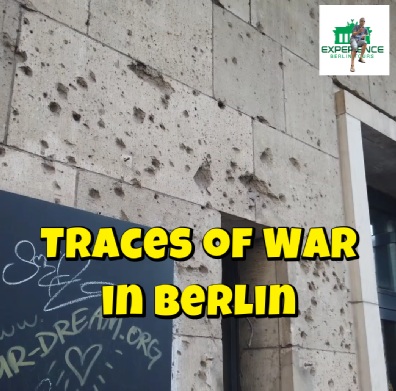
And in this section between Friedrichstrasse Station and Museum Island, the viaduct runs just south of the River Spree.
I bet that some of you reading this post found me because of 2 videos that I published on battle damage in Berlin.
6. Trains to Life – Trains to Death
This memorial is one that catches most of my guests unaware of its existence.
It commemorates the Kindertransport, which allowed thousands of mostly Jewish children to escape Nazi persecution by train, often without their parents.
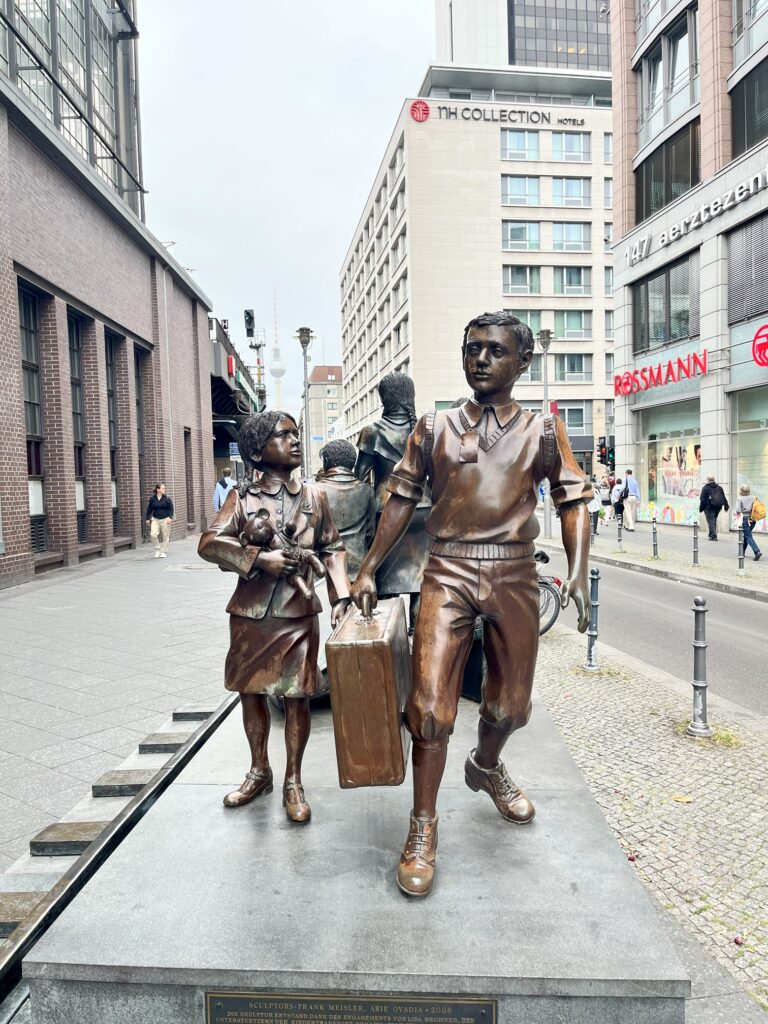
At the same time, it recalls how railways were later used to deport millions to ghettos and extermination camps.
It’s placed in front of Friedrichstrasse Station, where some of the transports departed from.
7. Friedrich Strasse Escape Attempt
In the final days of April–May 1945, the Friedrichstraße area became part of a desperate escape corridor as the Soviet Army closed in on central Berlin.
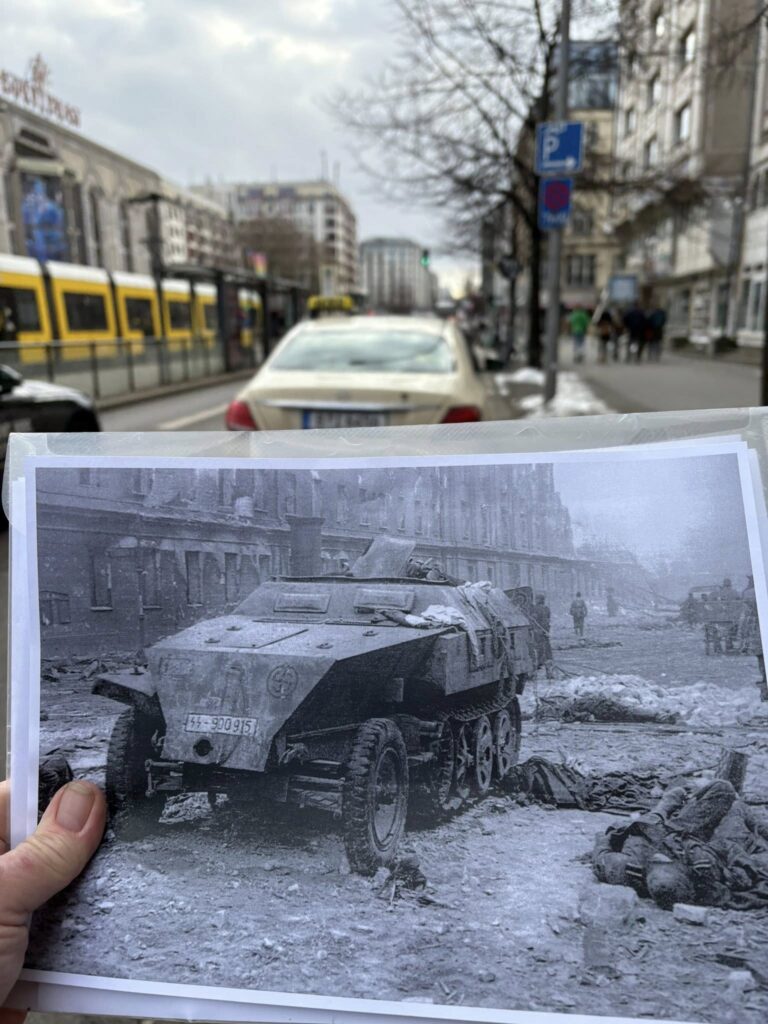
This stop helps illustrate the chaotic endgame of the regime: not heroic last stands, but frantic attempts to survive—and to evade accountability—as Berlin fell.
8. Boros Collection Hochbunker
This massive concrete structure was built during World War II as an air-raid bunker, part of Berlin’s desperate response to relentless Allied bombing.
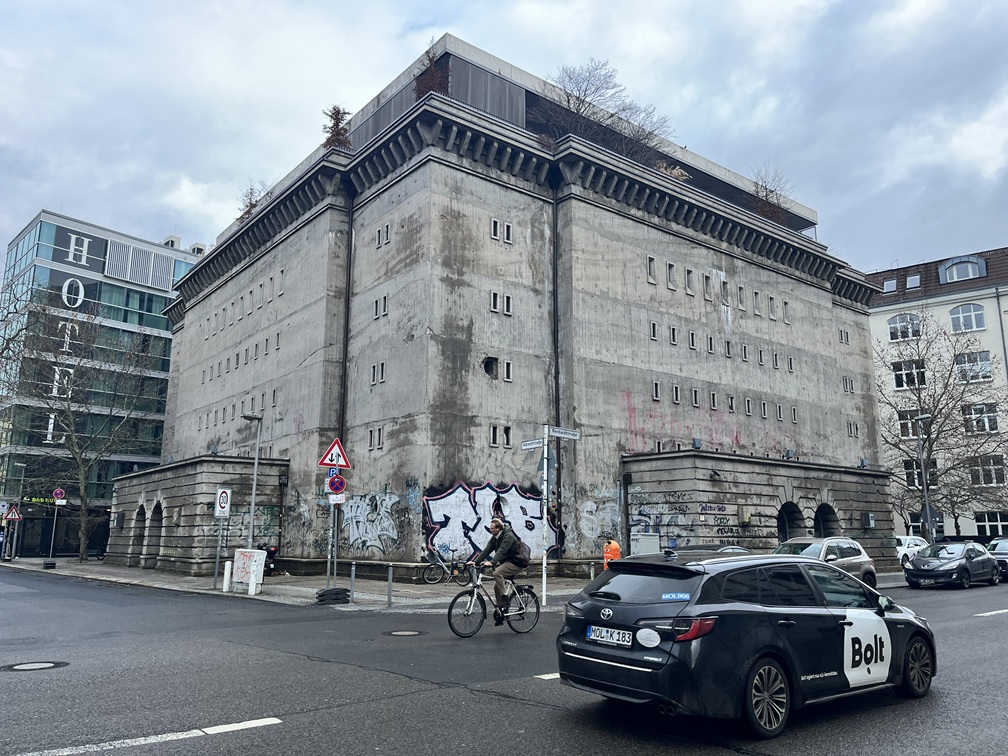
You can visit it today in its role as an art gallery.
But, if you’d like to visit such a bunker, my recommendation is to visit the Berlin Bunker Story near the Anhalter Bahnhof.
9. Grundgesetz 49
Here is another location where I see visitors to Berlin walk past with very little notice. This location marks the legacy of Germany’s post-war constitutional rebirth.
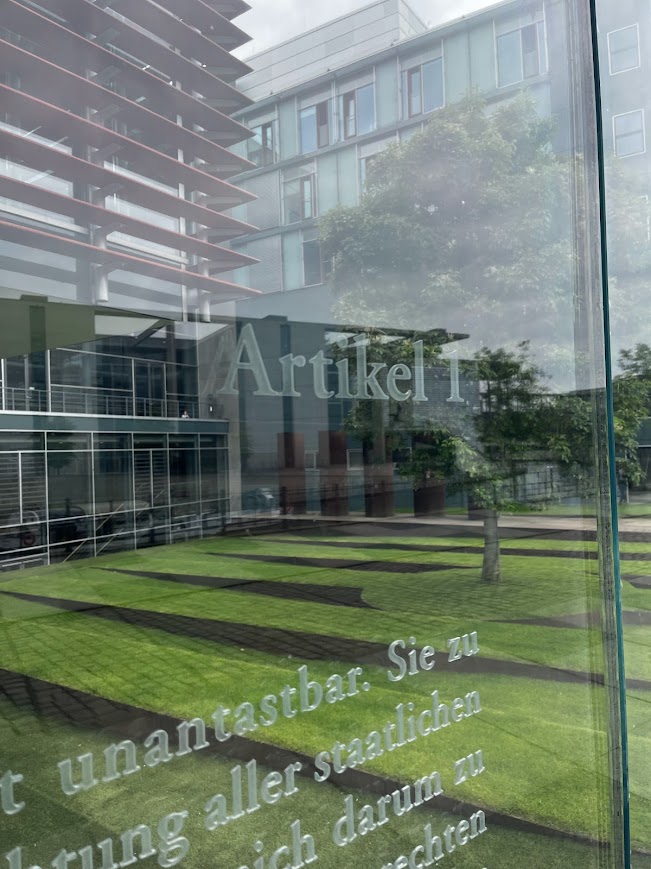
Drafted in 1949, the Basic Law was written explicitly to prevent a repeat of the Nazi dictatorship.
One of the reasons most people simply walk by is that it’s in German, and I think many people miss the QR code for transalations.
10. Former Reichstags Presidential Palace
This facade shows part of the former Reichstag President’s Palace.
The building is linked to a controversial theory about the Reichstag Fire of 27 February 1933. A heating tunnel linked Göring’s official residence here to the parliament building.
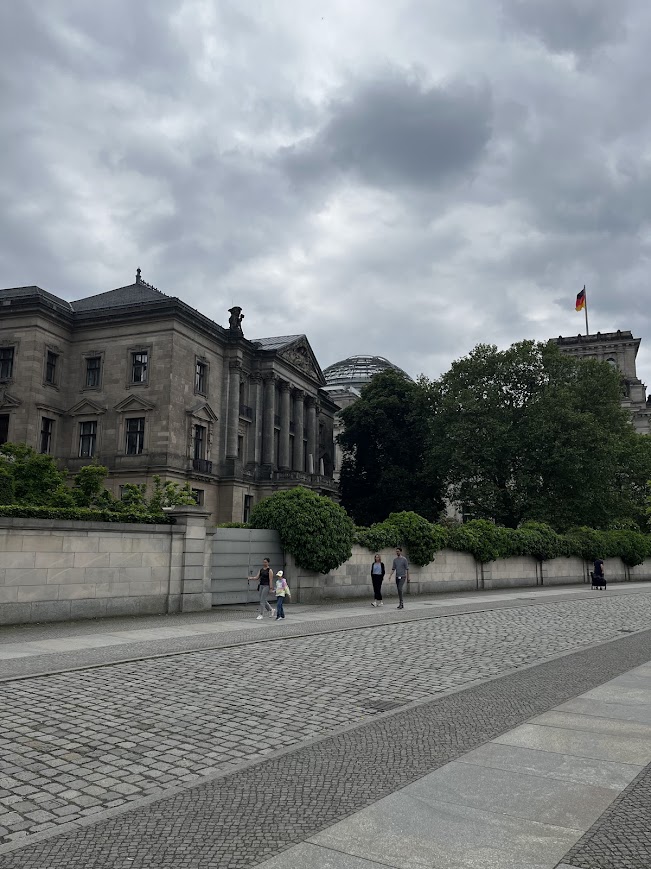
I go into much more detail about the fire as well as the theories concerning who was really behind it in my audio tour.
11. Grosse Halle
I never tire of seeing the facial expressions of tour guests when I explain that a 300 meter square by 280 meter high Pantheon-inspired dome was to be built here.
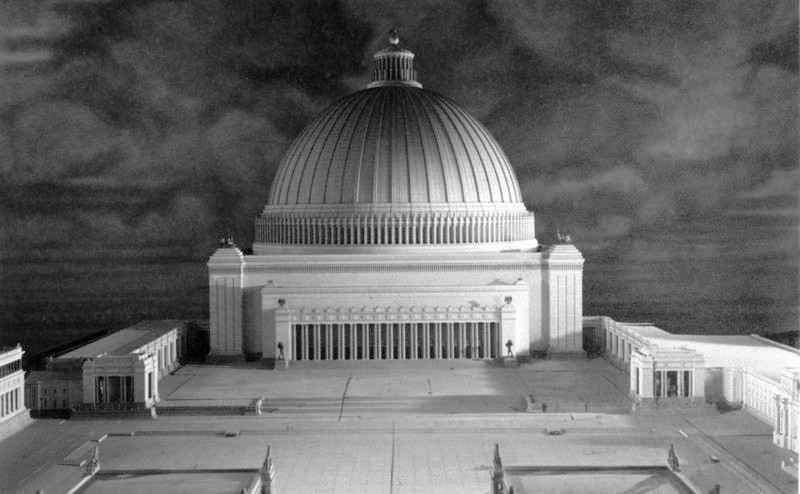
This whole area between the Hauptbahnhof and the Reichstag would have looked so much different than today.
And the construction on this project was indeed started but halted as WWII arrived.
This is another stop that only the audio tour clip can do justice, but I did make a video on Germania that includes this dome.
12. Kroll Opera Haus
After the Reichstag fire, the German parliament met here under heavy Nazi intimidation. In March 1933, deputies inside this building passed the Enabling Act, granting Hitler dictatorial powers and effectively ending parliamentary democracy
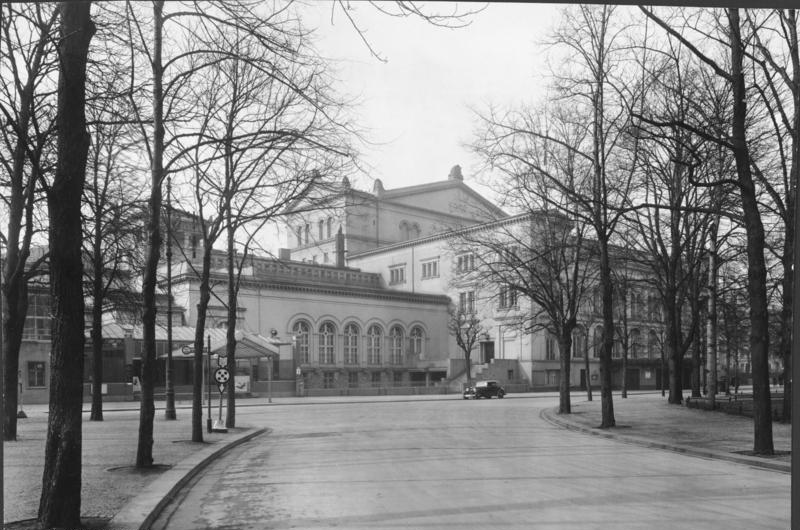
The building no longer exists. Today, there is a stone memorial to Poland.
This is another location that I bet 99% or more of visitors walk past without realizing it.
13. Battle of the Reichstag
Red Army forces assulted the Reichstag mostly on its eastern front. The building stood but was heavily damaged.
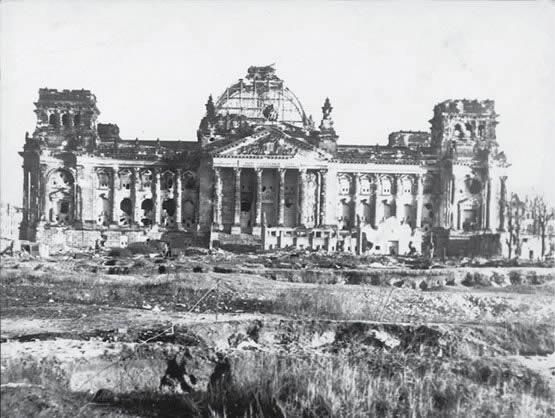
You have to look closely to see the patchwork repairs on the building’s facade, where repairs were even possible.
Just imagine the carnage here in the closing days of the battle.
14. Memorial to the Murdered Members of the Reichstag
Here’s yet another memorial that many people simply walk past, not realizing what it is.
It commemorates the 96 German parliamentarians killed by the Nazis.
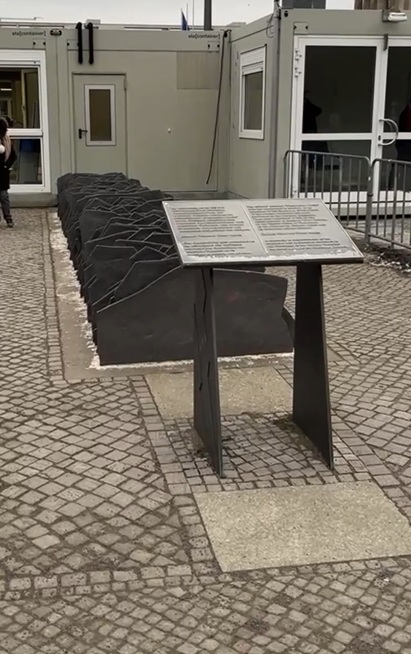
Each slate lists the name, date of birth, and party affiliation, as well as the date and location of death.
Most were political opponents on the left, SPD and KPD party members.
15. Memorial to Europe's Sinti and Roma Murdered Under Nazism
This memorial sits on the path between the Reichstag and the Brandenburg Gate.
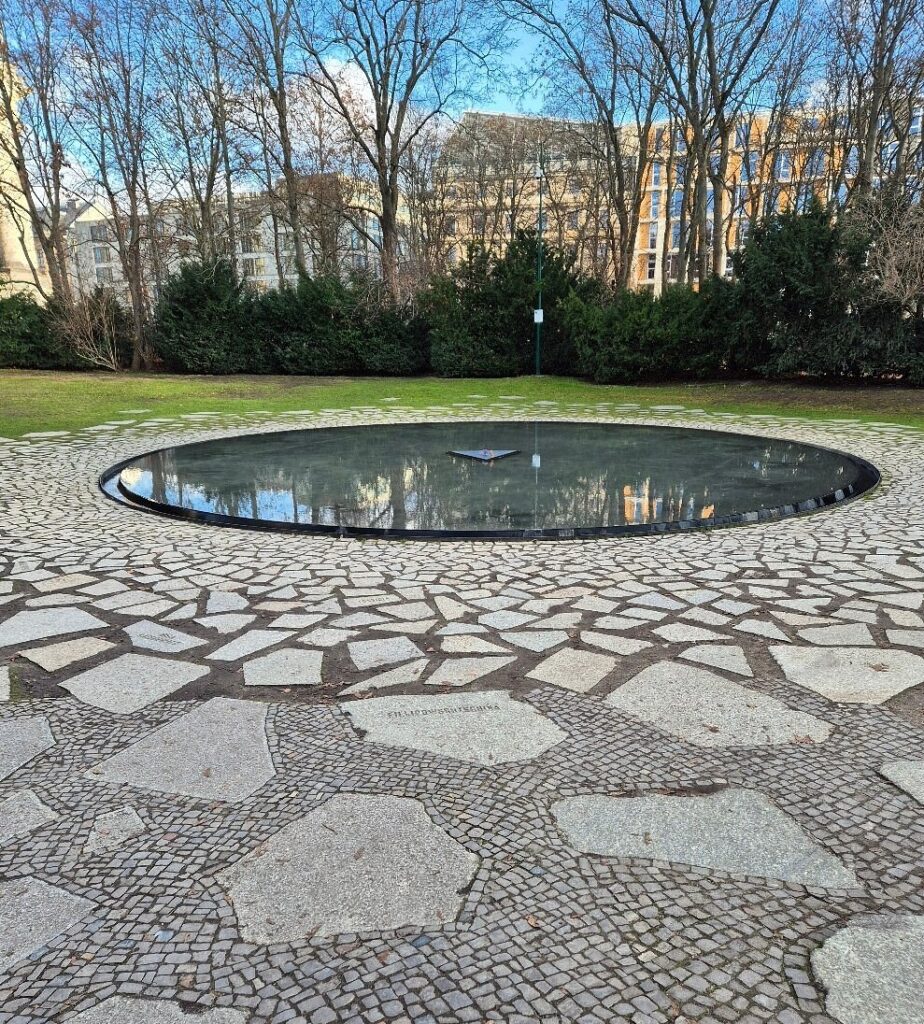
The memorial contains a circular reflecting pool surrounded by poems and testimonies.
The single flower laid daily in the center honors the hundreds of thousands persecuted and murdered under racial laws.
16. Soviet War Memorial Tiergarten
Exit the Sinti and Roma Memorial to the left and make a right turn before the Brandenburg Gate.
The Soviet War Memorial Tiergarten is about 100 meters to the west.
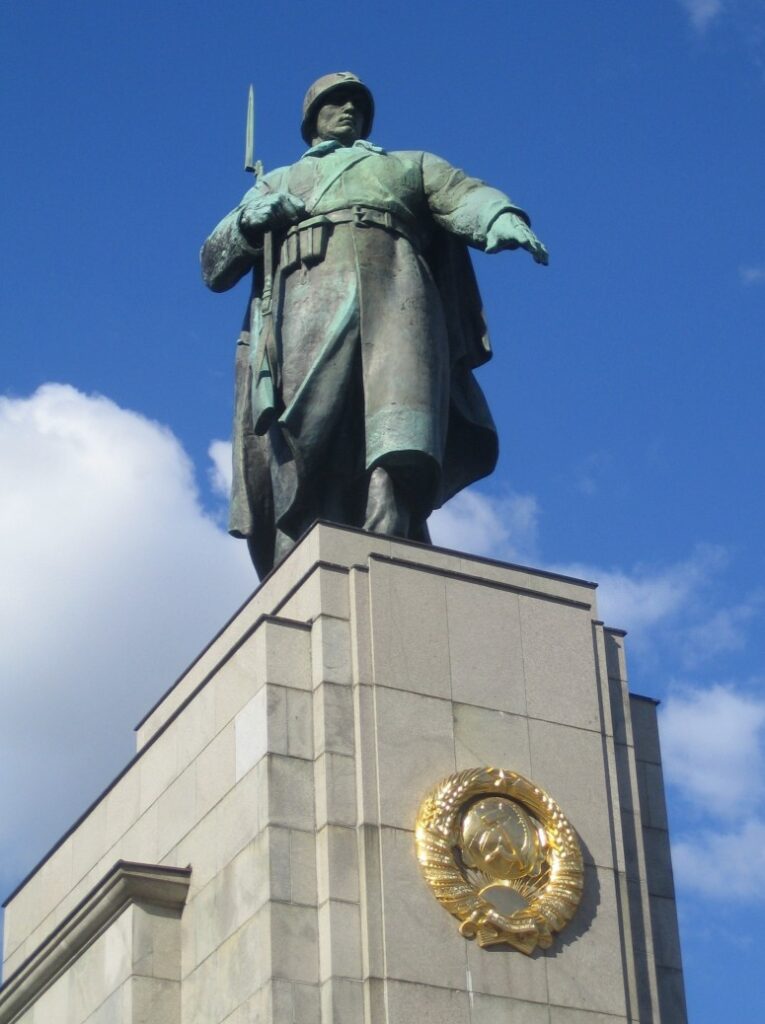
This memorial commemorates Soviet soldiers killed in the final Battle of Berlin and marks the Red Army’s decisive role in defeating Nazi Germany.
This is just one of three Soviet War Memorials in Berlin.
My audio tour takes a deep dive into the symbolism of this memorial.
17. Brandenburg Gate
During the Nazi era, the Brandenburg Gate served as a dramatic propaganda backdrop for rallies and parades.
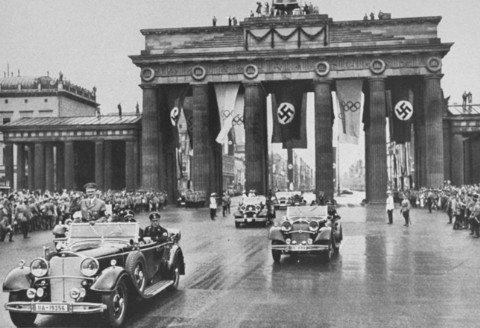
By 1945, it stood battered amid ruins, symbolizing the collapse of the regime that had so eagerly claimed it.
18. Memorial to the Murdered Jews of Europe
Next is the Memorial to the Murdered Jews of Europe, often referred to as the Holocaust Memorial, a vast field of concrete stelae that invites you to walk inside and experience the disorientation and weight of absence.
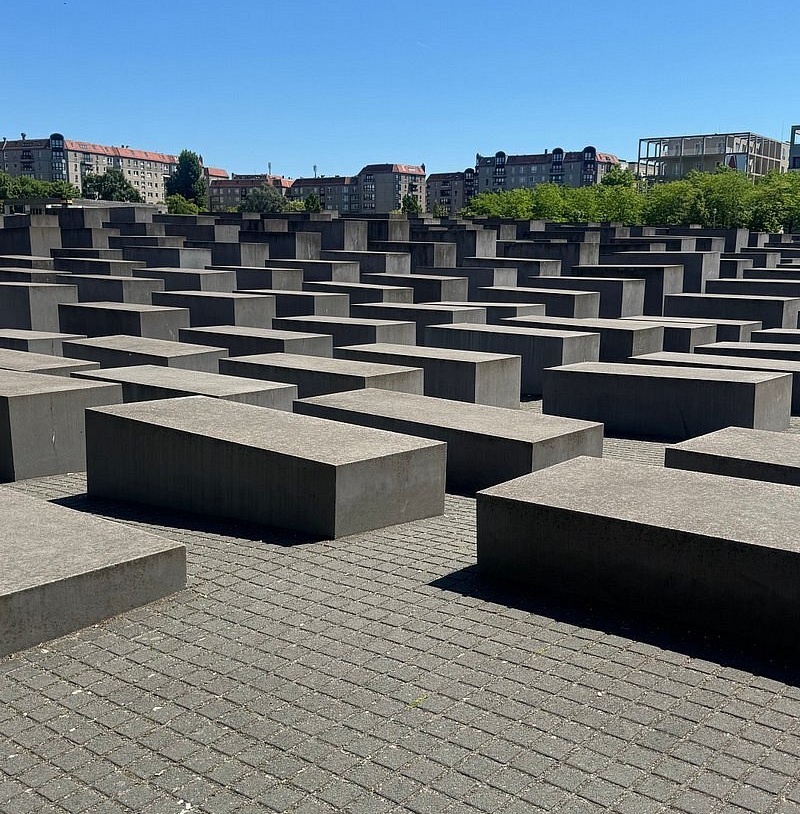
You could spend an hour here if you visit the information center.
Otherwise, you can walk through the memorial while listening to my audio clip in about 5-10 minutes.
19. The Führerbunker
This area once housed the nerve center of Nazi power and the underground bunker where Hitler spent his final days in April 1945.
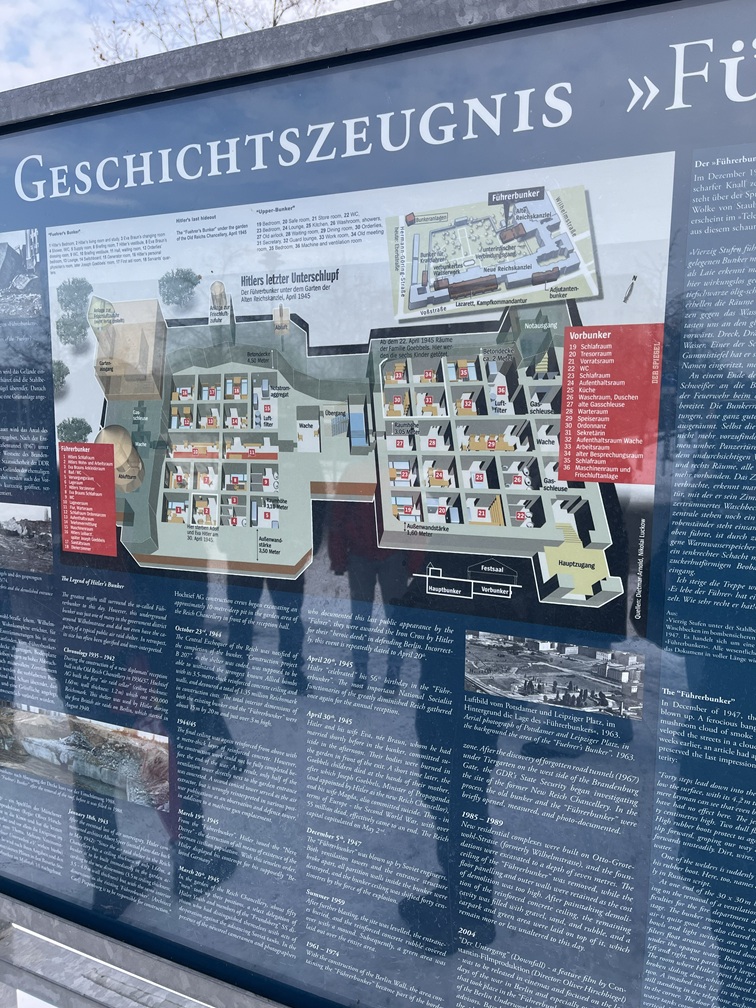
It’s really hard to imagine how different this location looked prior to WWII.
In my audio tour, I try to paint a picture in your mind about how the government quarter appeared.
20. Johann-Georg-Elser-Memorial
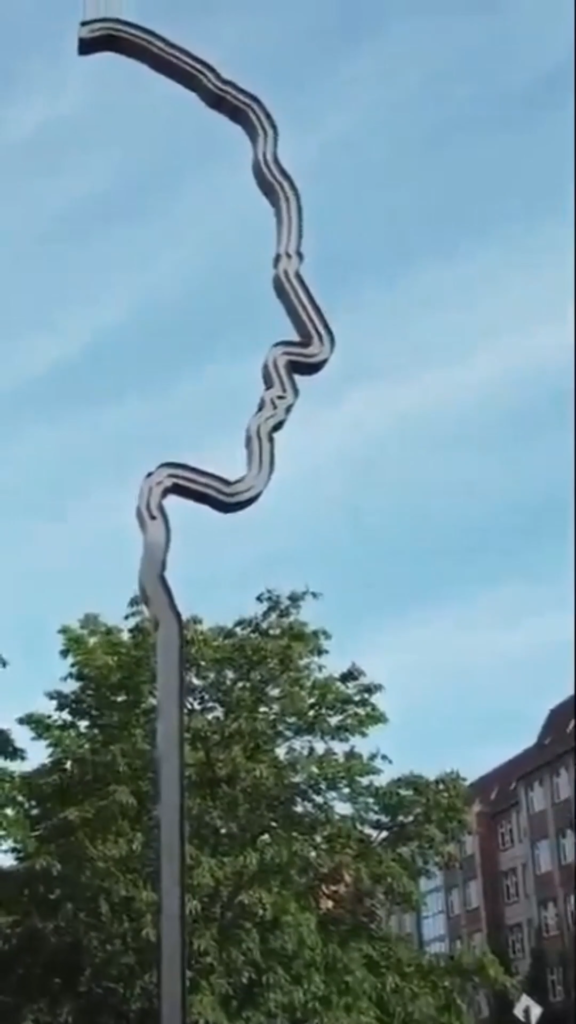
This memorial is for Johann Georg Elser, who attempted to assassinate Adolf Hitler and several other Nazi leaders.