
Visiting Berlin’s Schwerbelastungskörper
The Schwerbelastungskörper is a 12,650-ton concrete cylinder built in 1941 and 1942 to test whether Berlin’s soil could support the enormous triumphal arch planned for Hitler’s reconstructed Nazi capital, commonly known as Germania.
The planned arch would have been approximately 117 meters high and 170 meters wide.
The cylinder sank 19.3 centimeters in two and a half years—far more than planners wanted.
This did not prove that the arch was impossible, but it showed that extensive stabilization of the ground would have been necessary.
The cylinder was supposed to be buried beneath a new road, but the Germania project was never completed.
Find It Using the Experience Berlin Tours App
The Schwerbelastungskörper is hidden away near railway tracks and residential streets in southern Berlin.
It is not in an area where most visitors would simply stumble across it.
I’ve included it in my Experience Berlin Tours app. You could get Google maps directions through the app with the click of a button.
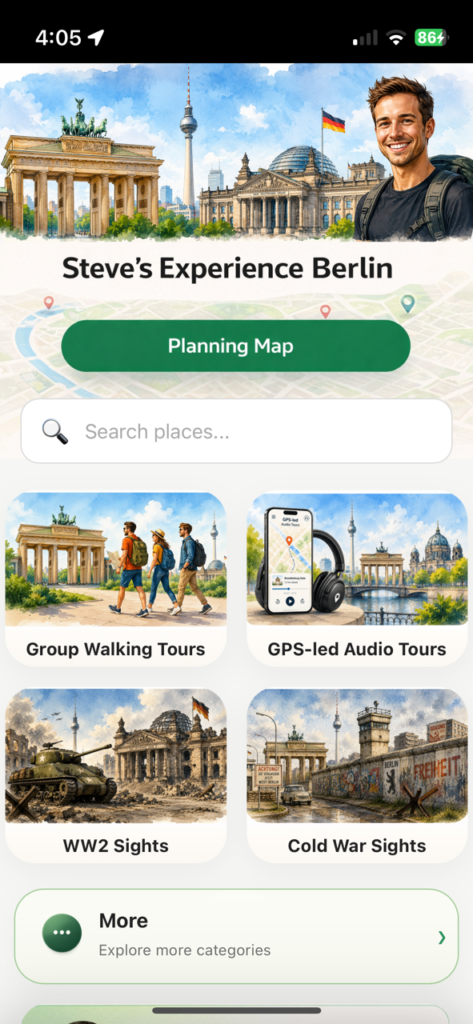
The closest S-Bahn stations are Julius-Leber-Brücke and Yorckstr. It’s a 10-15-minute walk from either station to reach this heavy-load-bearing-body.
The M43 bus runs nearby.
What You Will See
The Schwerbelastungskörper is not a conventional museum. There are no large exhibition galleries, and most people will only need about 30 minutes to see it.
Allow closer to 45 minutes if you want to read all the displays and climb the observation tower.
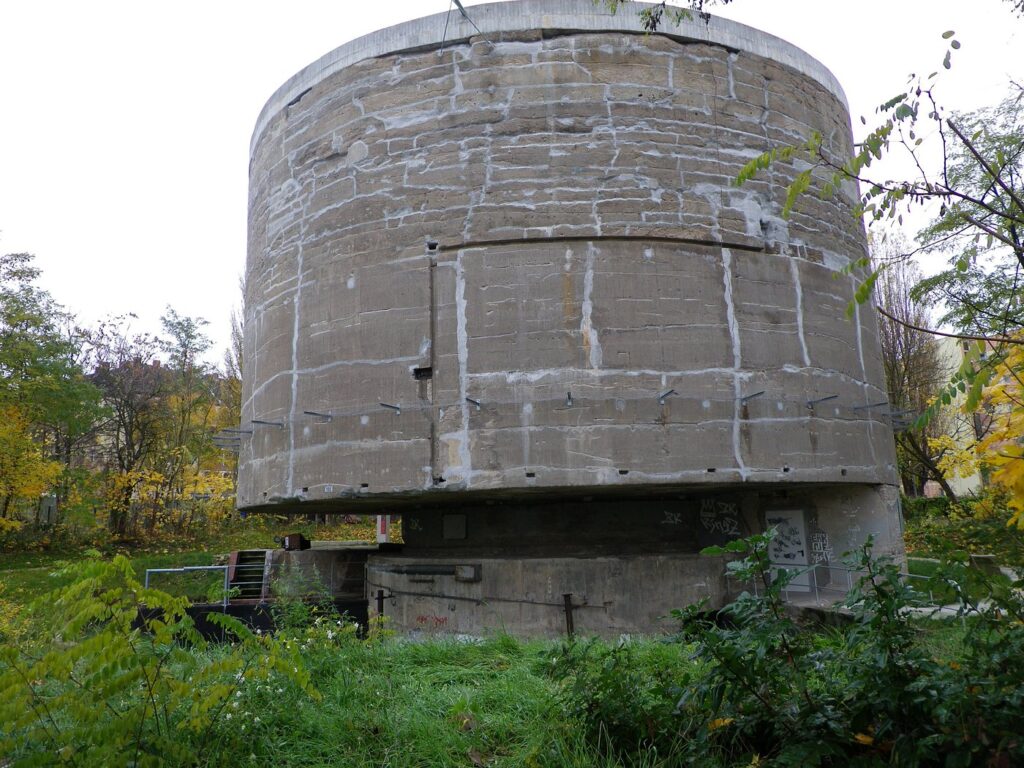
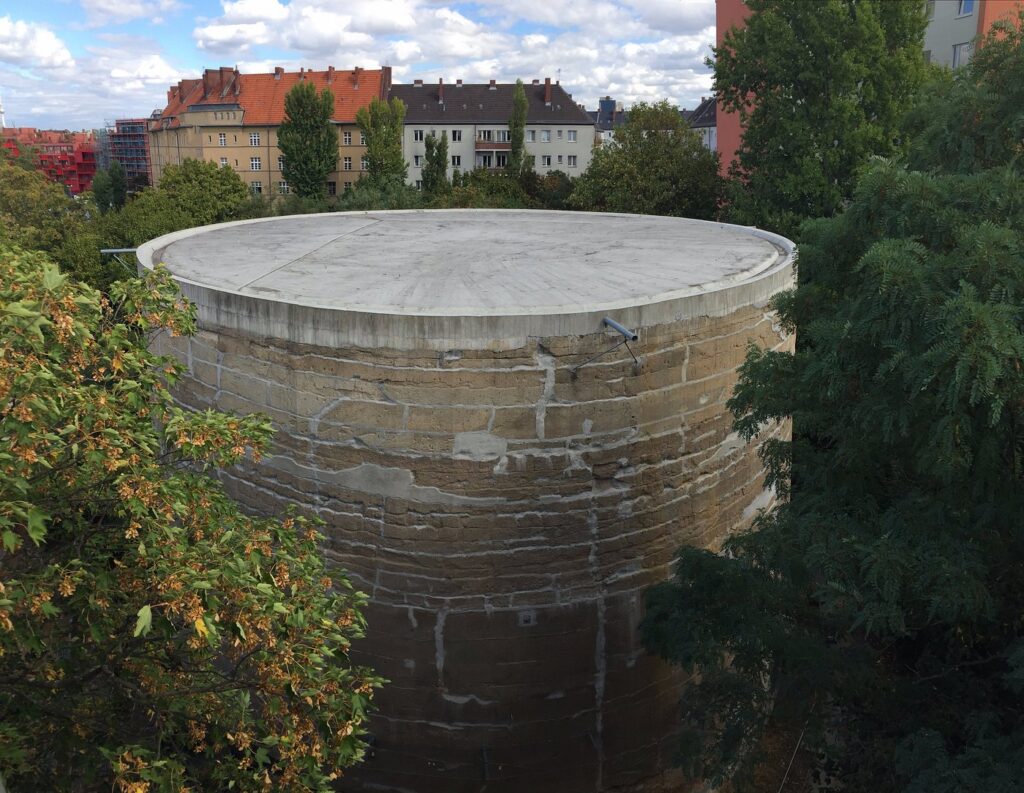
The first thing you see is the enormous upper cylinder. It measures 21 meters across and rises approximately 14 meters above the ground.
What you cannot see from outside is the narrower section extending about 18 meters beneath it.
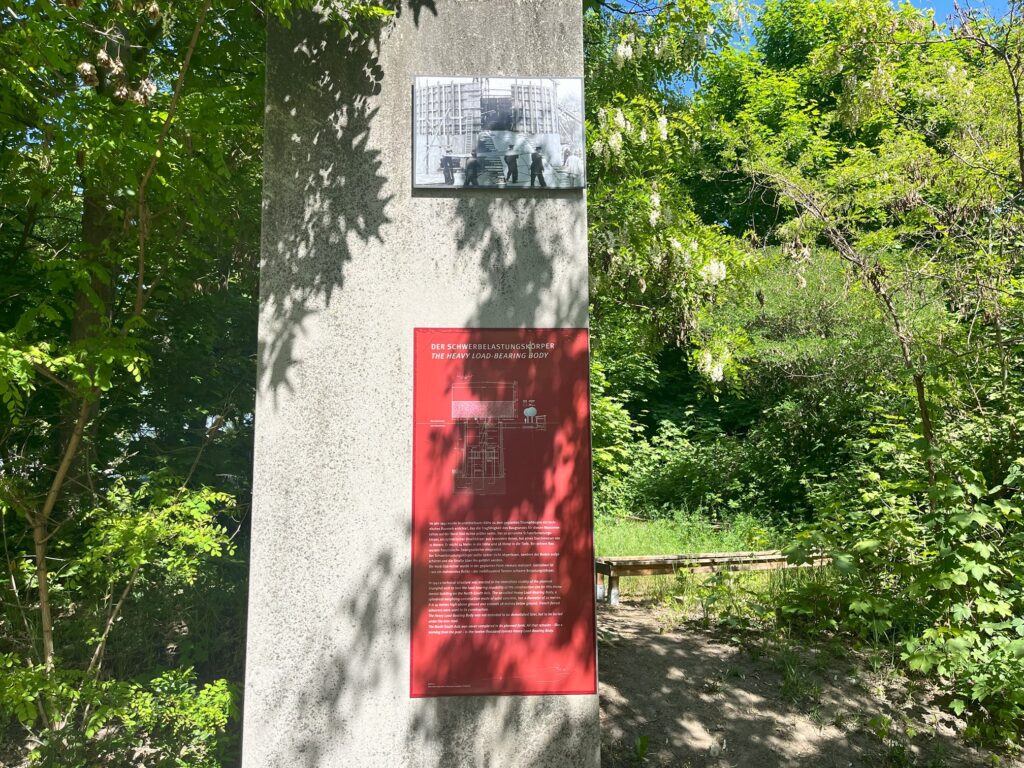
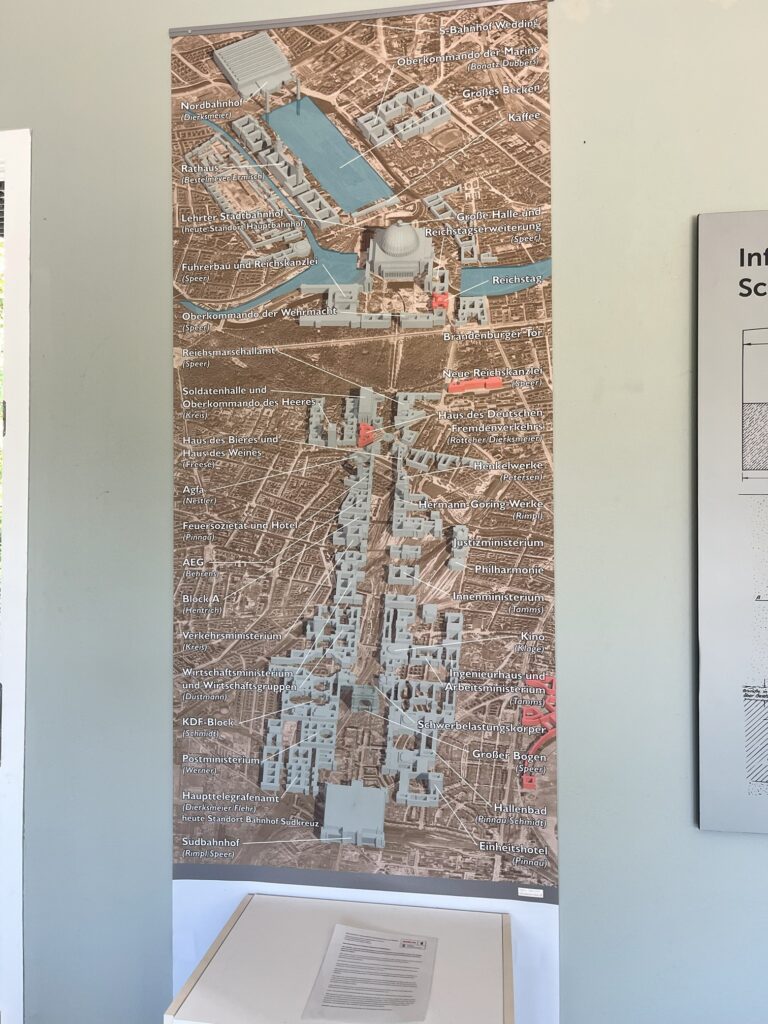
Three information displays explain the structure, the planned triumphal arch and the wider Germania project. They also address the use of French forced laborers during its construction.
When the interior is accessible, a pedestrian tunnel leads into part of the structure.
Inside, you can see concrete chambers, rusted metal fittings, and remnants associated with the original measuring equipment. You can also look down into one of the lower areas of the cylinder.
The interior is interesting, but the visit makes the most sense after climbing the adjacent observation tower.
Climb the Observation Tower
The tower provides 360-degree views across this part of southern Berlin, although I would not describe it as one of the city’s major observation decks.
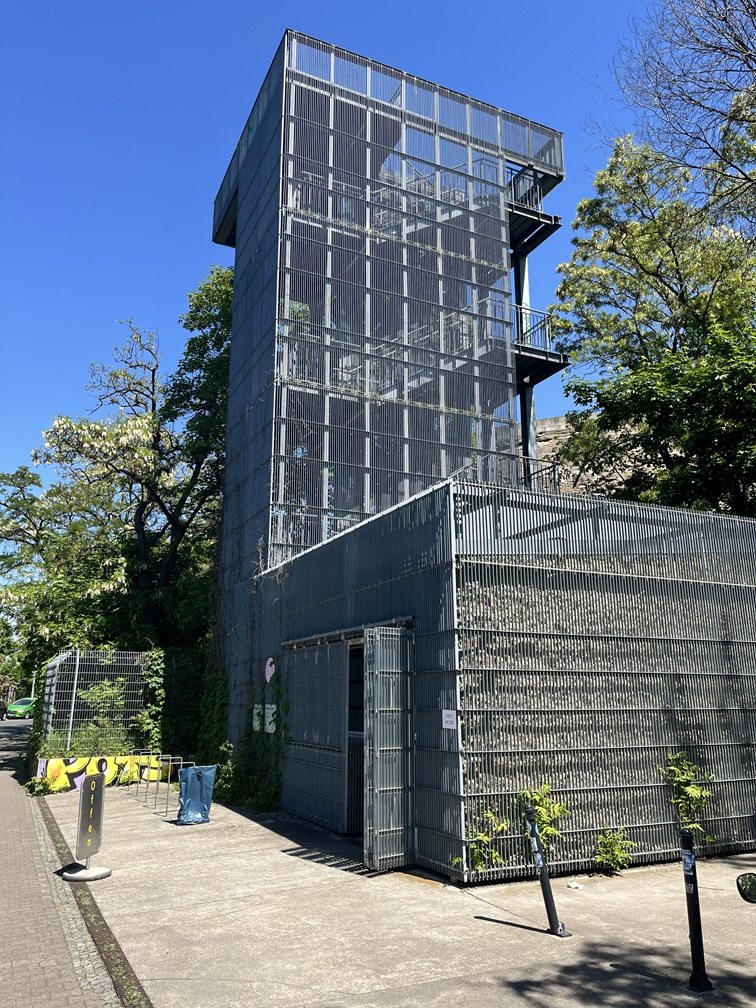
Its real value is the view directly below.
From the platform, you can finally appreciate the diameter of the Schwerbelastungskörper and understand how the visible cylinder sits above the narrower underground section.
The elevated perspective also helps place the structure within the route planned for Germania’s monumental north–south axis.
For most first-time visitors, I would not prioritize the Schwerbelastungskörper over Berlin’s major historical attractions.
However, it is worth visiting if you have a particular interest in Nazi architecture, bunkers, engineering, urban planning, or unusual surviving structures.
Standing beside this 12,650-ton cylinder makes the scale of Hitler and Albert Speer’s plans far easier to comprehend than looking at architectural drawings alone.
I recommend incorporating it into a wider visit rather than traveling across Berlin solely to spend 30 minutes here.
The Experience Berlin Tours Planning Map can help you identify other historical locations nearby and save them together under My Trip.